Small- and medium-sized (SMEs) manufacturers are often looking for step-function type change to increase their competitiveness. After reviewing several issues SMEs are experiences that are limiting productivity, offering daycare options for staff members has shown to be a significant step in improving retention rates, and reducing lead times.

For a small scale company, low retention rates can be detrimental to overall success. Taking the time and resources to train new staff regularly is a costly endeavor that can make it difficult to maintain production expectations.

Many companies, when analyzing the situation, have found that high turnover rates are primarily caused by single mothers lacking childcare needs. Some owners have made agreements with local daycare services to provide a mutually beneficial situation. Discount rates were offered to current staff members, having the offset cost paid by the company. The daycare benefitted from the significant increase in children to care for. For most, this did wonders for decreasing the turnover rate and in the end, ultimately cost less than the ongoing turnover.

The Changing Nature of Workforce Benefits

Professionals, regardless of the industry they belong believe employers are not doing enough to support parents. There is a rising cost in childcare, and as an employee, paying attention to these needs would help to reduce workforce turnover. You will also be able to attract talents into your workforce with a childcare focused incentive. It is already established that the absence of quality healthcare could be a hindrance to allowing parents, especially women, are being focused in the workplace; single fathers are not also exempted.

Applying daycare and other childcare focused incentives will not only reduce employee turnover. In the long-term, it will affect productivity as parents will be more focused on their job knowing their children are close by in a secure environment.

In India, for example, there is the Maternity Benefit Act, which mandates that in any establishment with more than 50 people on its payroll, the employer is mandated to provide a Creche facility. Moreso, the mothers would be permitted to check on their children not less than four times during the working hours.

What SMEs Stand To Gain

There’s a lot at stake for SMEs beyond reducing workforce turnover. According to Childcare Aware, businesses in the United States lose around $4.4 annually as a result of childcare related absenteeism. As an SME, it’s not just enough to build Daycare centers, you can also consider childcare subsidies for nursing mothers to find affordable and reliable childcare centers.

In a report, it was noted that businesses that offer childcare assistance report a 54% positive impact on absenteeism. With childcare, you can boost your productivity with reduced absenteeism. The most important is that there will be a reduction in turnover by at least 60% and you can attract more talent as a business.

Final Thoughts

With the change in how people work, there is a need for attention to be shifted to providing the infrastructure that caters to childcare. This will be more practical if the employees, employees, and government pay more attention to solving these issues.

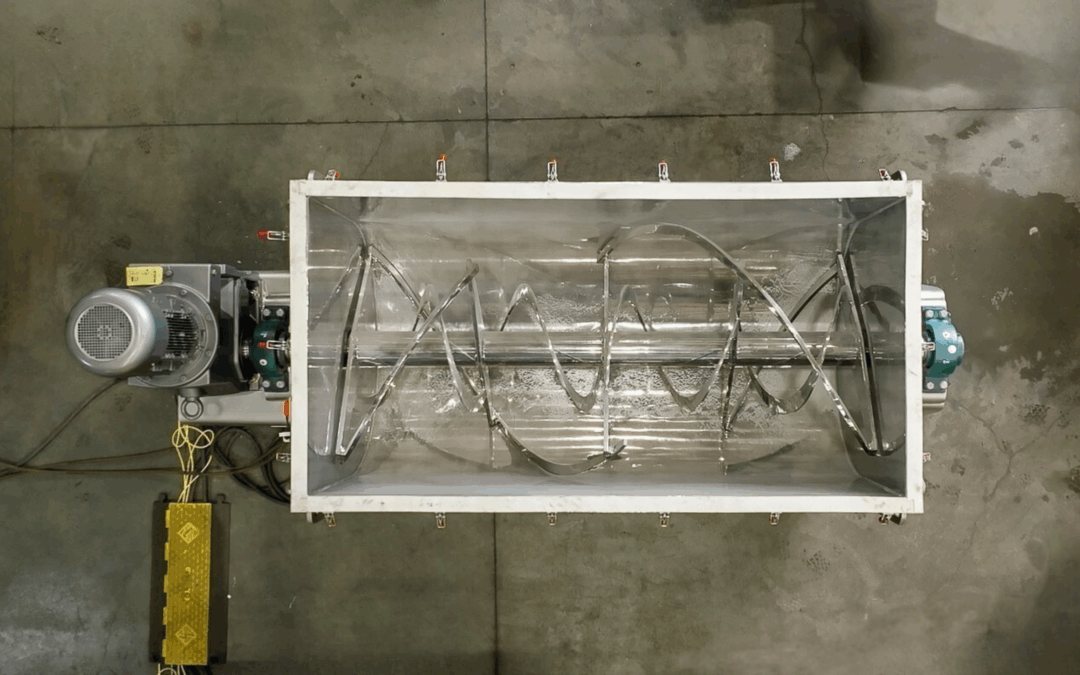
Most people never think about how the products they use every day are made.

Whether it’s the ceramic tile in your kitchen, the battery powering your phone, the paint on your walls, or the materials used in aerospace and medical applications, many products begin as raw powders. Before those powders become finished goods, they go through a series of processing steps that determine everything from product quality to production efficiency.

But while every step matters, there’s one thing manufacturers learn quickly: the process is only as reliable as the equipment behind it.


It All Starts with the Material

Raw materials rarely arrive in the perfect condition needed for production. They often need to be blended, dried, classified, or reduced to a specific particle size before they can move to the next stage.

That may sound straightforward, but small inconsistencies can create big problems.

A slight variation in particle size can affect how materials blend. Poorly processed material can impact product performance. And when production schedules are tight, even a brief interruption can create a ripple effect throughout the entire operation.

That’s why manufacturers place so much emphasis on consistency from the very beginning.


The Step That Often Determines Everything Else

Every stage of powder processing contributes to the quality of the finished product, but particle size reduction often has the greatest influence on everything that follows.

In industries like ceramics, even small variations in particle size can affect surface finish, strength, and overall product quality. Consistent milling helps manufacturers maintain tighter process control from batch to batch.

This is where ball mills play a critical role.

For decades, ball mills have been one of the most trusted methods for achieving uniform particle size and creating consistency throughout the manufacturing process. While the technology itself is proven, what really matters is how reliably the equipment performs over time.

Because in manufacturing, consistency isn’t achieved through occasional success. It’s achieved through repeatable performance every single day.


The Reality of Downtime

Ask any plant manager what keeps them up at night, and there’s a good chance downtime will be near the top of the list.

When a critical piece of equipment goes down, production doesn’t just slow down—it can stop altogether.

Production schedules slip. Customer delivery dates get pushed back. Operators sit idle while maintenance teams troubleshoot the issue. What starts as a maintenance problem can quickly become a much larger business challenge.

That’s why reliability isn’t simply a maintenance concern. It’s a production concern. It’s a profitability concern. And in many cases, it’s a customer satisfaction concern.

Manufacturers don’t just need equipment that works. They need equipment they can count on.


Built for the Long Haul

The best processing equipment isn’t necessarily the equipment with the most features. It’s the equipment that shows up every day and does its job.

Industrial environments are demanding. Equipment faces abrasive materials, long operating hours, and constant production pressure. Reliability isn’t something that’s added later—it’s something that must be engineered into the machine from the beginning.

That’s one reason ball mills continue to be trusted across so many industries. When designed and built correctly, they provide dependable performance for years while helping manufacturers maintain consistent product quality.

In many cases, the lowest-cost machine becomes the most expensive option when maintenance costs, replacement parts, and lost production time are taken into account. That’s why experienced manufacturers evaluate equipment based on total cost of ownership, not just the initial purchase price.


Why Reliability Matters More Than Ever

For decades, Orbis Machinery has worked with manufacturers across industries to solve particle size reduction challenges and improve process reliability.

In today’s manufacturing environment, reliable equipment becomes more than a production asset—it becomes a competitive advantage.

Reliable milling equipment helps create predictable outcomes, reduce waste, minimize downtime, and support long-term operational success. When manufacturers can trust their equipment, they can focus less on troubleshooting and more on growing their business.


Ready to Improve Your Milling Process?

Whether you’re replacing aging equipment, expanding production capacity, or looking to improve particle size consistency, the team at Orbis Machinery can help identify the right milling solution for your operation.

Our ball mills are built to deliver dependable performance, consistent results, and long-term value for manufacturers across a wide range of industries.

From advanced ceramics and battery materials to paints, minerals, and specialty chemicals, the products people depend on every day begin with a reliable manufacturing process. And that process depends on equipment manufacturers can trust.

Contact Orbis Machinery today to discuss your application and discover how a dependable ball mill can help improve consistency, reduce downtime, and keep production moving for years to come.

In manufacturing, every finished product starts with a process. And every successful process starts with equipment you can trust.

Because when production depends on performance, reliability isn’t optional—it’s everything.