The Service Council (TSC), one of the few influential voices within the service industry, has completed a survey revealing one of the mutual concerns of industrial manufacturing service leaders. They all are thinking about ways to improve their customer experience. They are searching for the answers to improve management of data-driven operations as well as knowledge. Talent requirement and skill gap were the major aspects that emerged from this study.

There are three major requirements of all industrial manufacturing firms. These include recruitment, management, and retention of top talent

These are the most talked topics of the majority of the industrial manufacturing firms. These concerns are correlated with various factors that include aging labor force, competition in the job market and the upsurge of millennials.

Talent Shortage: The Biggest Hurdle In Creating Manufacturing Service Leaders

The results of the study discussed above support the fact that talent shortage is one of biggest concerns of the industrial sectors globally. A recent study by Manpower reveals that around 40% of the companies report the shortage of top talent. This is exactly what pre-financial crisis data states. The other major revelation of this study is that over the last couple of years the numbers of employees being trained by employers is increased to double.

Training People Within The Workforce

The solution to this problem is finding the leaders within the existing workforce. Many companies facing talent shortage have been planning to invest resources into training their own workforce rather than finding talent outside to fill in the void. Training your employees to be the best doesn’t only benefit that individual, but it also helps your firm to grow.

Benefits of Training Your Own Workforce

Every employer needs exceptionally skilled members on his team. When you invest your time and resources on the development of a team of specialists, it positively impacts the following factors: Retention of employee, branding of employer, and attracting new candidates. No matter how good this idea may seem, it can only be implied to entry-level and mid-management level jobs. Things are quite different when it comes to creating Manufacturing Service Leaders.

Succession Planning

Most of the service leaders who took part in The Service Council study state that they are concerned about the lack of business leaders in the coming era. They fear there will be no one to navigate the ever increasing demand of the growing market.

There are three factors that this study brought to light. This will make it easier for employers to create manufacturing service leaders for the future.

  • Plan Your Success More Frequently: You should plan your success at all times. You should take measures to incorporate such practices into your workforce that lead to success.
  • Prepare Your Manufacturing Service Leaders For The Future: Prepare your workforce for the future. Train them to face whatever the future holds.
  • Plan Your Success Strategically: Plan your success just as you would plan to achieve any other of your important business goals.

You need to keep all these factors in mind in order to lead your firm to success.

Jenkins, A. (2017, October). Advancing manufacturing leadership. Retrieved from https://www.mckinsey.com/business-functions/operations/our-insights/advancing-manufacturing-leadership

 

Muthana, A. (2018, August 25). Attributes of Manufacturing Leaders, Not Just Managers. Retrieved from https://www.mmsonline.com/blog/post/attributes-of-manufacturing-leaders-not-just-managers

Most people never think about how the products they use every day are made.

Whether it’s the ceramic tile in your kitchen, the battery powering your phone, the paint on your walls, or the materials used in aerospace and medical applications, many products begin as raw powders. Before those powders become finished goods, they go through a series of processing steps that determine everything from product quality to production efficiency.

But while every step matters, there’s one thing manufacturers learn quickly: the process is only as reliable as the equipment behind it.


It All Starts with the Material

Raw materials rarely arrive in the perfect condition needed for production. They often need to be blended, dried, classified, or reduced to a specific particle size before they can move to the next stage.

That may sound straightforward, but small inconsistencies can create big problems.

A slight variation in particle size can affect how materials blend. Poorly processed material can impact product performance. And when production schedules are tight, even a brief interruption can create a ripple effect throughout the entire operation.

That’s why manufacturers place so much emphasis on consistency from the very beginning.


The Step That Often Determines Everything Else

Every stage of powder processing contributes to the quality of the finished product, but particle size reduction often has the greatest influence on everything that follows.

In industries like ceramics, even small variations in particle size can affect surface finish, strength, and overall product quality. Consistent milling helps manufacturers maintain tighter process control from batch to batch.

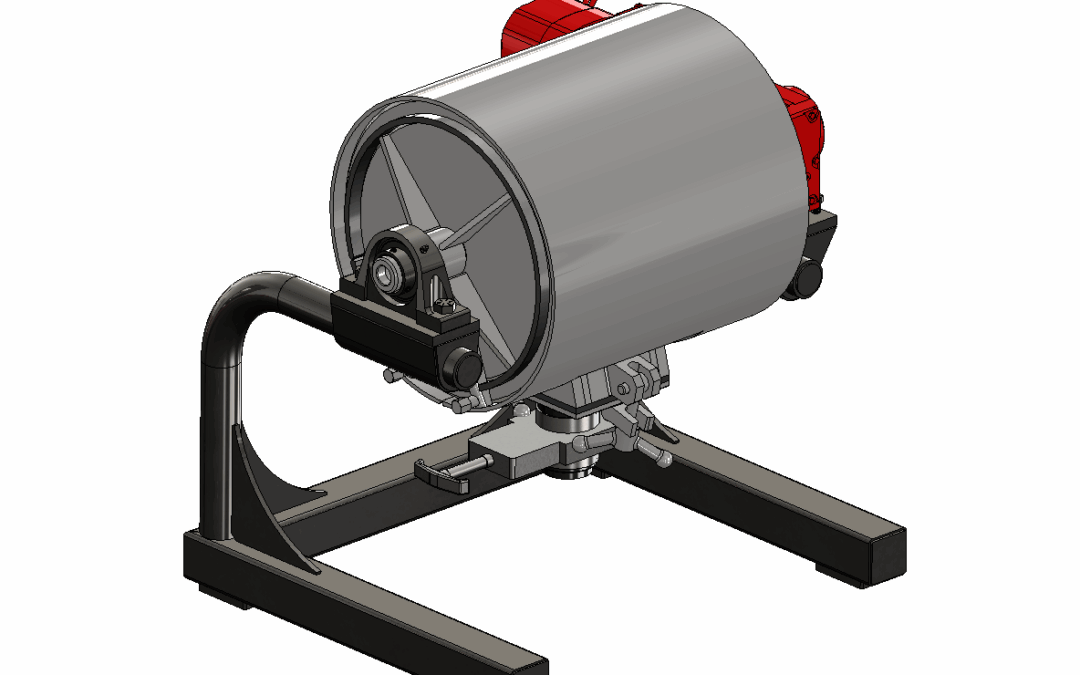
This is where ball mills play a critical role.

For decades, ball mills have been one of the most trusted methods for achieving uniform particle size and creating consistency throughout the manufacturing process. While the technology itself is proven, what really matters is how reliably the equipment performs over time.

Because in manufacturing, consistency isn’t achieved through occasional success. It’s achieved through repeatable performance every single day.


The Reality of Downtime

Ask any plant manager what keeps them up at night, and there’s a good chance downtime will be near the top of the list.

When a critical piece of equipment goes down, production doesn’t just slow down—it can stop altogether.

Production schedules slip. Customer delivery dates get pushed back. Operators sit idle while maintenance teams troubleshoot the issue. What starts as a maintenance problem can quickly become a much larger business challenge.

That’s why reliability isn’t simply a maintenance concern. It’s a production concern. It’s a profitability concern. And in many cases, it’s a customer satisfaction concern.

Manufacturers don’t just need equipment that works. They need equipment they can count on.


Built for the Long Haul

The best processing equipment isn’t necessarily the equipment with the most features. It’s the equipment that shows up every day and does its job.

Industrial environments are demanding. Equipment faces abrasive materials, long operating hours, and constant production pressure. Reliability isn’t something that’s added later—it’s something that must be engineered into the machine from the beginning.

That’s one reason ball mills continue to be trusted across so many industries. When designed and built correctly, they provide dependable performance for years while helping manufacturers maintain consistent product quality.

In many cases, the lowest-cost machine becomes the most expensive option when maintenance costs, replacement parts, and lost production time are taken into account. That’s why experienced manufacturers evaluate equipment based on total cost of ownership, not just the initial purchase price.


Why Reliability Matters More Than Ever

For decades, Orbis Machinery has worked with manufacturers across industries to solve particle size reduction challenges and improve process reliability.

In today’s manufacturing environment, reliable equipment becomes more than a production asset—it becomes a competitive advantage.

Reliable milling equipment helps create predictable outcomes, reduce waste, minimize downtime, and support long-term operational success. When manufacturers can trust their equipment, they can focus less on troubleshooting and more on growing their business.


Ready to Improve Your Milling Process?

Whether you’re replacing aging equipment, expanding production capacity, or looking to improve particle size consistency, the team at Orbis Machinery can help identify the right milling solution for your operation.

Our ball mills are built to deliver dependable performance, consistent results, and long-term value for manufacturers across a wide range of industries.

From advanced ceramics and battery materials to paints, minerals, and specialty chemicals, the products people depend on every day begin with a reliable manufacturing process. And that process depends on equipment manufacturers can trust.

Contact Orbis Machinery today to discuss your application and discover how a dependable ball mill can help improve consistency, reduce downtime, and keep production moving for years to come.

In manufacturing, every finished product starts with a process. And every successful process starts with equipment you can trust.

Because when production depends on performance, reliability isn’t optional—it’s everything.