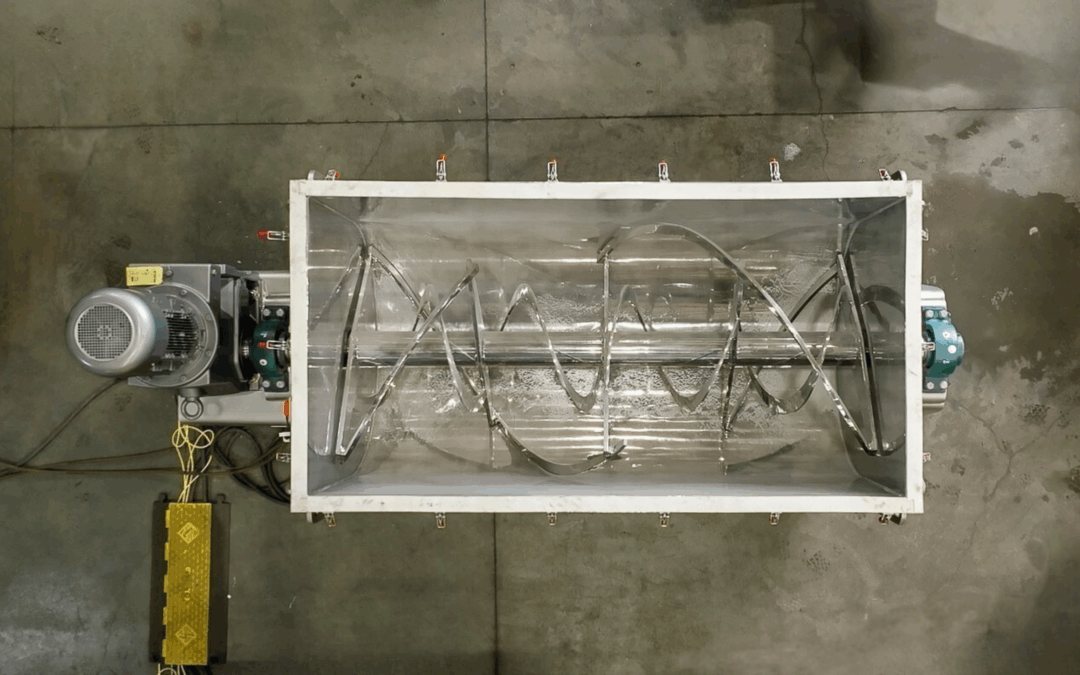
How to Discharge High-Viscosity Materials From a Double Arm Sigma Mixer
A double arm sigma mixer can produce a uniform batch and still create a production bottleneck. The problem often appears after the sigma mixer blades stop.
High-viscosity materials such as adhesives, sealants, mastics, silicone compounds and other sticky or cohesive products may not flow freely out of the mixer. They can cling to the trough, bridge at an outlet, cool and become harder to move, or require substantial operator intervention before the vessel is empty. When that happens, discharge becomes part of the cycle time and can have a meaningful impact on production.
For that reason, discharge should not be treated as a secondary option added after the double arm mixer has already been selected. With difficult materials, the discharge method can influence the mixer configuration, vessel design, production mode and even the way the equipment connects to the next step in the process.
Why Sigma Mixer Discharge Can Become the Production Bottleneck
Low-viscosity liquids generally benefit from gravity. Open a suitable outlet and the material moves. High-viscosity products inside a sigma mixer can behave very differently.
The same properties that make a material difficult to mix can also make it difficult to discharge. High resistance to flow can prevent the product from moving toward an outlet. Tack can cause the material to cling to product-contact surfaces, while cohesion can cause a batch to move as a mass instead of breaking apart and flowing freely.
The result can be a double arm mixer that completes the active mixing portion of the cycle on time but then sits partially full while operators wait, scrape the trough, reposition containers or manually help the material out.
For a production operation, that lost time matters. If a batch requires 30 minutes to mix but another 15 minutes to empty, discharge represents one-third of the total production cycle. Improving how the mixer empties can therefore be just as important as improving how quickly it mixes.
What Changes When a Double Arm Sigma Mixer Stops
One reason discharge problems are easy to underestimate is that the material may look relatively manageable while the mixer is running. During active mixing, the blades continuously apply mechanical force, folding, kneading, circulating or shearing the material and keeping it moving through the trough.
Once those blades stop, the forces acting on the product change. The material now has to move because of gravity, vessel movement, pressure, a mechanical discharge device or some combination of those forces.
That transition can expose material behavior that was less obvious during mixing. A sticky formulation may remain attached to the trough wall. A heavily filled compound may bridge over an outlet. A hot product may begin to cool and become increasingly resistant to movement before the mixer is completely empty.
The equipment-selection question, therefore, should not simply be: Can the sigma mixer move the material?
It should also be: What does the material do when the mixer is no longer moving it?
That distinction can determine which discharge configuration makes sense.
Material Variables That Determine Sigma Mixer Discharge Behavior
Viscosity is an obvious factor in discharge, but it is far from the only one. Tack describes how strongly a product tends to adhere to surfaces, while cohesion affects how strongly the material holds together. Temperature can change viscosity during the discharge cycle, and fill level and trough geometry influence how much material is positioned near the outlet. The size and shape of the outlet can also determine whether the product flows freely or bridges.
Downstream requirements matter as well. A material that simply needs to fall into a tote creates a very different discharge problem than a material that must feed directly into an extruder, forming process, packaging system or another piece of production equipment.
This is why discharge selection should begin with the material and the overall production process rather than with a preference for a particular piece of equipment.
Tilt Discharge for a Double Arm Sigma Mixer
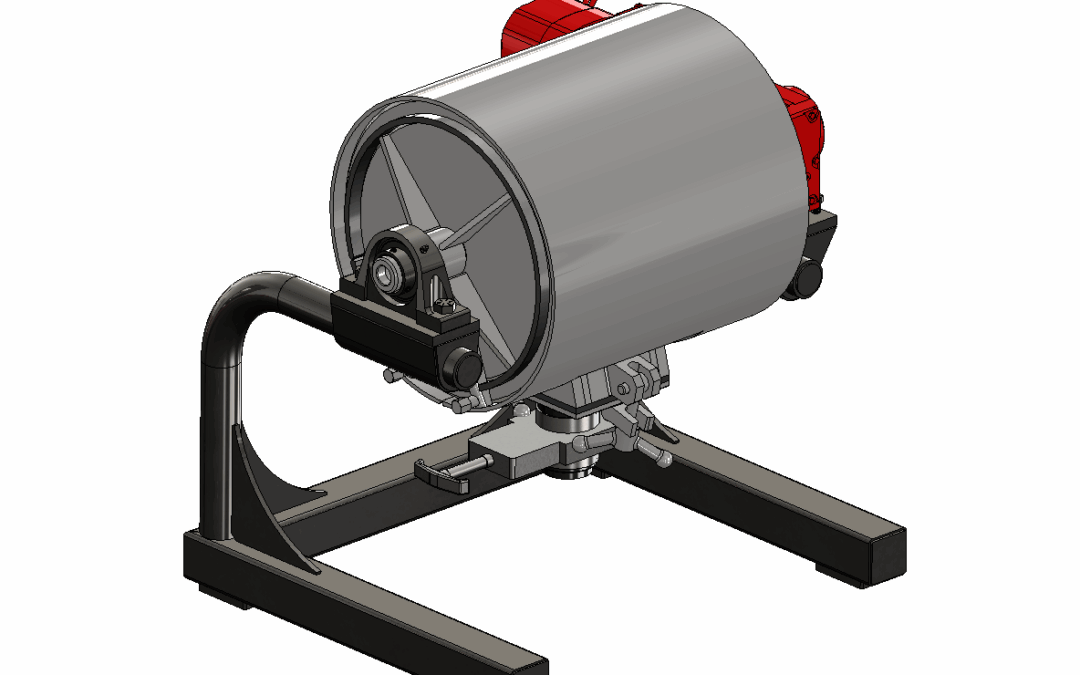
A tilting double arm mixer rotates the vessel or trough to direct the finished batch toward the discharge area. This can be a practical solution when a material is difficult to remove from a fixed mixer but will move once gravity and vessel angle are working together.
Tilt discharge can also provide relatively open access to the trough, which may be beneficial for cleaning, inspection or batch changeover.
The limitation is that tilting does not create continuous mechanical force on the product. If a material strongly clings to surfaces or resists flow even when the vessel angle changes, operators may still need to assist with discharge.
The key question is not simply whether the mixer can tilt. It is whether changing the vessel angle provides enough force for the specific material to release consistently at production scale.
Bottom-Dump Sigma Mixer Discharge
A bottom-dump configuration creates an opening in the lower portion of the mixer trough so material can move directly downward. For products that are capable of flowing under gravity, this can provide an efficient and relatively direct discharge path while also simplifying the arrangement of receiving equipment below the mixer.
Again, material behavior determines how successful that approach will be.
A very sticky or cohesive product may not automatically move through an opening simply because the opening is beneath it. The material can bridge, hang up around the outlet or leave significant residue inside the trough. Outlet size, valve design, product temperature and the physical characteristics of the formulation all become important parts of the evaluation.
Bottom-dump discharge can be highly effective when the process is suited to it, but gravity still has to be capable of doing the work the configuration expects it to do.
Auger and Sigma Mixer-Extruder Discharge
When gravity is not enough, mechanical discharge may be appropriate.
A double arm mixer-extruder combines sigma mixing with an auger or screw positioned in the lower section of the trough. After the mixing cycle, the screw mechanically conveys the material out of the mixer. Instead of depending primarily on passive flow, the process gains an active force for moving the finished product.
For sticky, dense or highly viscous materials, that mechanical assistance can provide more predictable discharge and reduce dependence on the material flowing by itself. It can also help integrate the mixer with downstream processing because the screw can provide a more controlled material feed than simply allowing a batch to drop from the vessel.
That does not mean every difficult material requires auger discharge. It means the mixer configuration should provide the level of assistance the material and production process actually require.
How Temperature Changes Sigma Mixer Discharge
Temperature can make a discharge problem better or worse, depending on the formulation.
Some materials become easier to move when warm. If the product begins cooling during or immediately after mixing, its viscosity may increase and make it progressively more difficult to remove from the mixer. In those situations, discharge can become time-sensitive.
The process may need to maintain temperature through the end of the batch, empty the mixer within a defined window or coordinate thermal control with the discharge system. Other formulations may respond differently to changes in temperature, so it is important to understand the actual material behavior rather than assume that hotter always means easier discharge.
For temperature-sensitive products, the conditions at the end of the mixing cycle can be just as important as those during mixing.
Match the Double Arm Sigma Mixer to the Next Process Step
A sigma mixer discharge system should not be designed in isolation. What happens immediately after the mixer can influence the preferred configuration just as much as what happens inside it.
If the finished material simply drops into a container, the priority may be fast emptying and clean release. If it feeds another piece of equipment, the process may require a more controlled discharge rate. If the next operation involves extrusion, forming, coating or another continuous process, a mixer-extruder configuration may simplify material handling and reduce manual transfer between steps.
This is one reason a batch sigma mixer and a batch mixer-extruder can solve different production problems even when both are technically capable of mixing the same material. The equipment has to fit the process around the mixer, not just the mixing step itself.
Test Sigma Mixer Discharge Before Scale-Up
Process testing is often discussed primarily in terms of mixing quality: Did the material blend properly? Was the desired consistency achieved? Did the equipment provide enough shear or kneading action?
For difficult materials, discharge should be part of that evaluation.
A representative trial can help engineers observe whether the product releases from the trough, how much residue remains, whether the material bridges near the outlet and how changes in temperature affect its ability to move. These observations can be especially valuable because seemingly small discharge problems at laboratory or pilot scale may become much larger at production scale.
If a smaller sigma mixer requires substantial scraping or manual assistance to empty, significantly increasing the batch size without addressing the underlying material behavior may create an even greater operational challenge.
Testing will not answer every scale-up question by itself, but it introduces actual material behavior into the equipment-selection process instead of relying entirely on assumptions.
Questions to Answer Before Selecting a Sigma Mixer Discharge Method
Before choosing a double arm sigma mixer discharge configuration, document both the material characteristics and the production requirements. Useful questions include:
-
What is the material viscosity at the end of the batch?
-
Is the product tacky or strongly adhesive to metal surfaces?
-
Does the material flow under gravity?
-
How does temperature affect its ability to move?
-
How quickly must the mixer empty?
-
How much residual material is acceptable?
-
Will operators have access to the trough?
-
Where does the material go immediately after discharge?
-
Does the next process require a controlled feed?
-
Would a mixer-extruder reduce manual handling?
-
How will the equipment be cleaned between batches?
The answers help determine whether tilt, bottom-dump, auger discharge or another approach should be evaluated. They can also reveal whether the discharge method needs to influence other aspects of the mixer design.
Start With the Material, Then Configure the Double Arm Sigma Mixer
The best sigma mixer discharge method is not the one with the most features. It is the one that matches the way the material behaves and the way the production process needs to operate.
For high-viscosity applications, equipment selection should consider material behavior during mixing and after mixing, along with temperature, cycle time, discharge requirements and downstream handling. Looking at those factors together makes it easier to determine whether the process calls for a standard batch double arm mixer, a mixer-extruder or another configuration.
Only then should the equipment configuration be finalized.
If you are evaluating a difficult high-viscosity process, the Orbis Double Arm Mixer Fit Check can help organize the questions that matter, including material behavior, production mode and discharge requirements.