In food manufacturing, consistency is everything. From the texture of dough to the uniformity of a seasoning blend. Behind every reliable product is a dependable mixing process, and two of the most commonly used tools for achieving this are ribbon blenders and paddle blenders. 

Both are versatile, efficient, and customizable, but understanding their differences can help food processors improve throughout, reduce waste, and ensure every batch meets the same high standards of quality and taste. Orbis ribbon and paddle blenders are available in working capacities up to 500 cubic feet and can be equipped with ASME code jackets for temperature controlled processing.


Understanding Ribbon Blenders

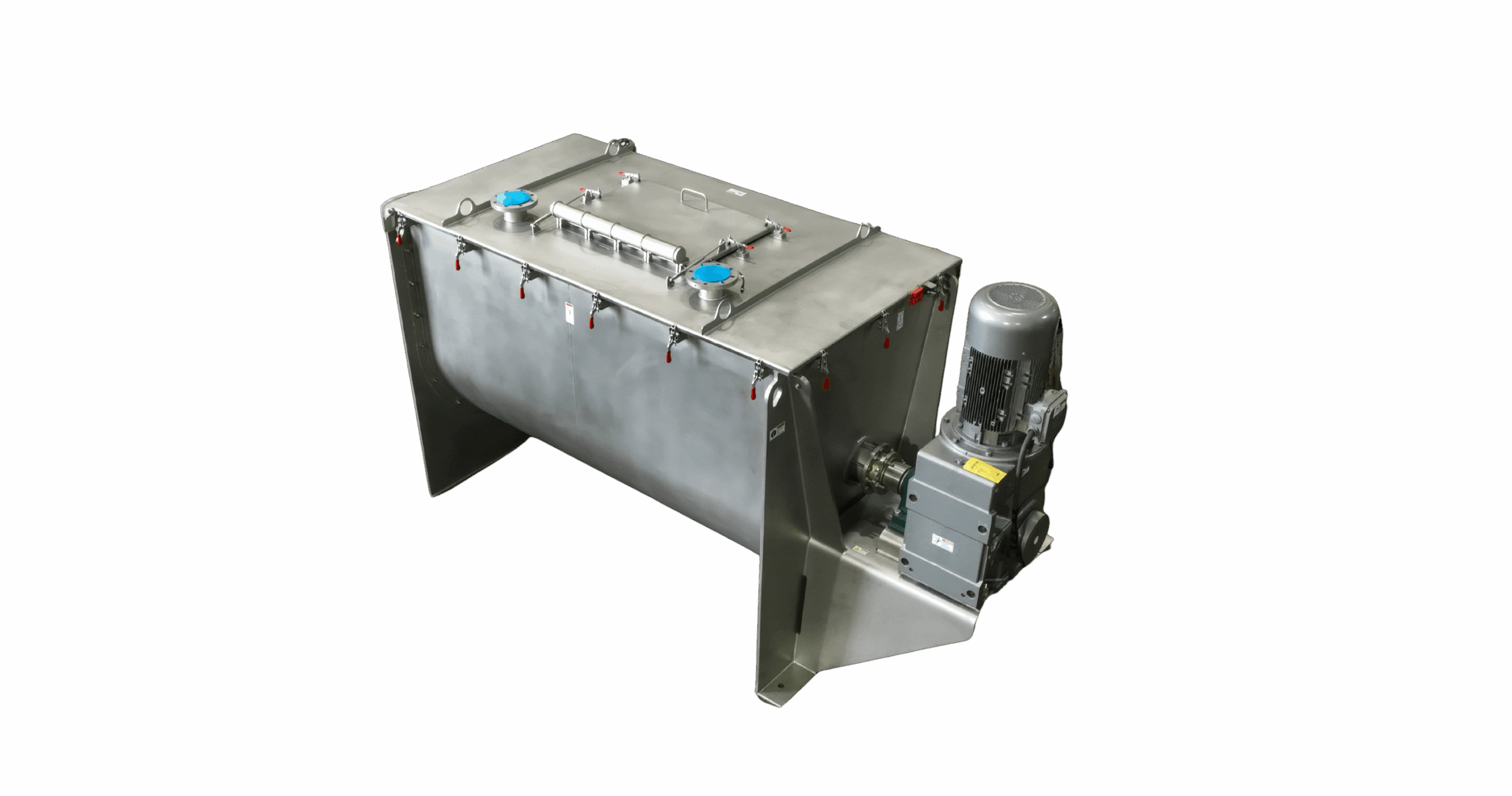
Ribbon blenders are horizontal mixers designed with double-helical ribbons that rotate within a U-shaped trough. The outer ribbons move ingredients in one direction while the inner ribbons move them in the opposite direction, creating a continuous flow that ensures a uniform blend.

They’re ideal for handling dry powders and free-flowing materials, making them a staple in food manufacturing environments where precision and high-volume mixing are essential.

Key Advantages of Ribbon Blenders
      • Uniform Mixing: The countercurrent ribbon design ensures even distribution of ingredients, even across large batch sizes.
      • High Capacity: Perfect for large-scale food production, including baking mixes, spices, and powdered beverages.
      • Energy Efficient: Requires relatively low power compared to other batch mixers, helping maintain cost efficiency.
      • Customizable Design: Options such as jacketed troughs for temperature control or sanitary stainless finishes can enhance food-grade performance.

Exploring Paddle Blenders

Paddle blenders, on the other hand, use flat or curved paddles that gently lift, fold, and tumble ingredients instead of slicing through them. This motion provides a low-shear mixing action that’s especially valuable for handling fragile or multi-density materials.

They’re often used when the product mix includes both dry and moist components, or when ingredients must retain their shape during processing.


Key Benefits of Paddle Blenders
      • Gentle Mixing Action: Ideal for delicate ingredients such as nuts, dried fruits, and coated snacks that can be damaged by higher-shear mixers.
      • Effective Liquid Incorporation: The paddle’s folding motion allows for even blending of liquids into dry materials, making it ideal for batters, doughs, or slurries.
      • Handles Diverse Textures: Accommodates materials with varying particle sizes or densities, maintaining blend integrity.
      • Reduced Heat Generation: Minimizes friction and prevents overheating – critical for heat-sensitive ingredients like chocolate, vitamins, or dairy powders.


Ribbon vs. Paddle Blenders: Which is Right for Your Application?

Both ribbon and paddle blenders deliver excellent mixing performance, but the best choice depends on your material characteristics and process goals.


Feature Ribbon Blender Paddle Blender
Ideal For Dry, free-flowing powders Fragile, moist, or sticky materials
Mixing Action Shear, radial and axial Gentle folding
Speed Faster mix times Slower mix times
Homogeneity High for similar particles Better for varied materials
Cleanout Moderate Easier (open paddles)


[Ribbon & Paddle Blenders Product Sheet]


Engineering Considerations for Food Manufacturers

When selecting the right blender, it’s not just about the material, it’s about the process requirements. Orbis Machinery works with food processors to design custom-engineered mixers that meet production goals while ensuring safety and repeatability.

Key factors to evaluate include:

    • Batch size and cycle time
    • Viscosity and flow behavior of ingredients
    • Cleaning requirements (CIP/SIP compatibility)
    • Temperature control and material sensitivity
    • Integration with upstream/downstream equipment

By tailoring design parameters, from paddle geometry and motor horsepower to discharge style and surface finish, manufacturers can optimize performance and reduce downtime across their blending operations.


Engineered for Food industry Standards

Orbis blenders are built to order for specific applications across the food, nutraceutical, and chemical sectors. Our engineering team collaborates directly with processors to design equipment that ensures:

  • Consistent batch to batch quality
  • Sanitary, easy to clean construction
  • Energy efficient performance
  • Precise, repeatable blending results

Every system is backed by decades of experience in process design and manufacturing, so whether you need a high efficiency ribbon blender or a gentle paddle mixer, Orbis delivers the reliability and quality you expect.


Final Thoughts: Consistency Begins in the Mixer

In food processing, quality control starts long before packaging, it begins at the blending stage. Ribbon and paddle blenders each bring unique advantages to the table, but both share one goal: helping manufacturers deliver consistent, high-quality products efficiently.

Choosing the right blender (and the right partner), can make all the difference in optimizing production and maintaining customer trust.


Ready to upgrade your blending process?

Talk to our engineering team – Contact Us

 

Most people never think about how the products they use every day are made.

Whether it’s the ceramic tile in your kitchen, the battery powering your phone, the paint on your walls, or the materials used in aerospace and medical applications, many products begin as raw powders. Before those powders become finished goods, they go through a series of processing steps that determine everything from product quality to production efficiency.

But while every step matters, there’s one thing manufacturers learn quickly: the process is only as reliable as the equipment behind it.


It All Starts with the Material

Raw materials rarely arrive in the perfect condition needed for production. They often need to be blended, dried, classified, or reduced to a specific particle size before they can move to the next stage.

That may sound straightforward, but small inconsistencies can create big problems.

A slight variation in particle size can affect how materials blend. Poorly processed material can impact product performance. And when production schedules are tight, even a brief interruption can create a ripple effect throughout the entire operation.

That’s why manufacturers place so much emphasis on consistency from the very beginning.


The Step That Often Determines Everything Else

Every stage of powder processing contributes to the quality of the finished product, but particle size reduction often has the greatest influence on everything that follows.

In industries like ceramics, even small variations in particle size can affect surface finish, strength, and overall product quality. Consistent milling helps manufacturers maintain tighter process control from batch to batch.

This is where ball mills play a critical role.

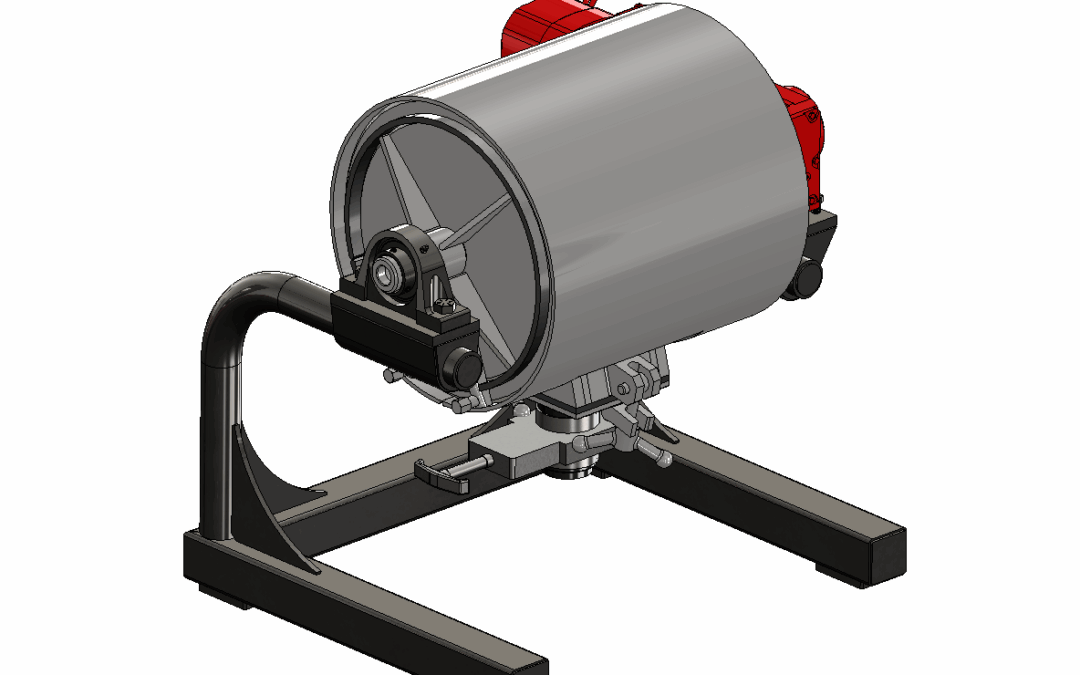
For decades, ball mills have been one of the most trusted methods for achieving uniform particle size and creating consistency throughout the manufacturing process. While the technology itself is proven, what really matters is how reliably the equipment performs over time.

Because in manufacturing, consistency isn’t achieved through occasional success. It’s achieved through repeatable performance every single day.


The Reality of Downtime

Ask any plant manager what keeps them up at night, and there’s a good chance downtime will be near the top of the list.

When a critical piece of equipment goes down, production doesn’t just slow down—it can stop altogether.

Production schedules slip. Customer delivery dates get pushed back. Operators sit idle while maintenance teams troubleshoot the issue. What starts as a maintenance problem can quickly become a much larger business challenge.

That’s why reliability isn’t simply a maintenance concern. It’s a production concern. It’s a profitability concern. And in many cases, it’s a customer satisfaction concern.

Manufacturers don’t just need equipment that works. They need equipment they can count on.


Built for the Long Haul

The best processing equipment isn’t necessarily the equipment with the most features. It’s the equipment that shows up every day and does its job.

Industrial environments are demanding. Equipment faces abrasive materials, long operating hours, and constant production pressure. Reliability isn’t something that’s added later—it’s something that must be engineered into the machine from the beginning.

That’s one reason ball mills continue to be trusted across so many industries. When designed and built correctly, they provide dependable performance for years while helping manufacturers maintain consistent product quality.

In many cases, the lowest-cost machine becomes the most expensive option when maintenance costs, replacement parts, and lost production time are taken into account. That’s why experienced manufacturers evaluate equipment based on total cost of ownership, not just the initial purchase price.


Why Reliability Matters More Than Ever

For decades, Orbis Machinery has worked with manufacturers across industries to solve particle size reduction challenges and improve process reliability.

In today’s manufacturing environment, reliable equipment becomes more than a production asset—it becomes a competitive advantage.

Reliable milling equipment helps create predictable outcomes, reduce waste, minimize downtime, and support long-term operational success. When manufacturers can trust their equipment, they can focus less on troubleshooting and more on growing their business.


Ready to Improve Your Milling Process?

Whether you’re replacing aging equipment, expanding production capacity, or looking to improve particle size consistency, the team at Orbis Machinery can help identify the right milling solution for your operation.

Our ball mills are built to deliver dependable performance, consistent results, and long-term value for manufacturers across a wide range of industries.

From advanced ceramics and battery materials to paints, minerals, and specialty chemicals, the products people depend on every day begin with a reliable manufacturing process. And that process depends on equipment manufacturers can trust.

Contact Orbis Machinery today to discuss your application and discover how a dependable ball mill can help improve consistency, reduce downtime, and keep production moving for years to come.

In manufacturing, every finished product starts with a process. And every successful process starts with equipment you can trust.

Because when production depends on performance, reliability isn’t optional—it’s everything.