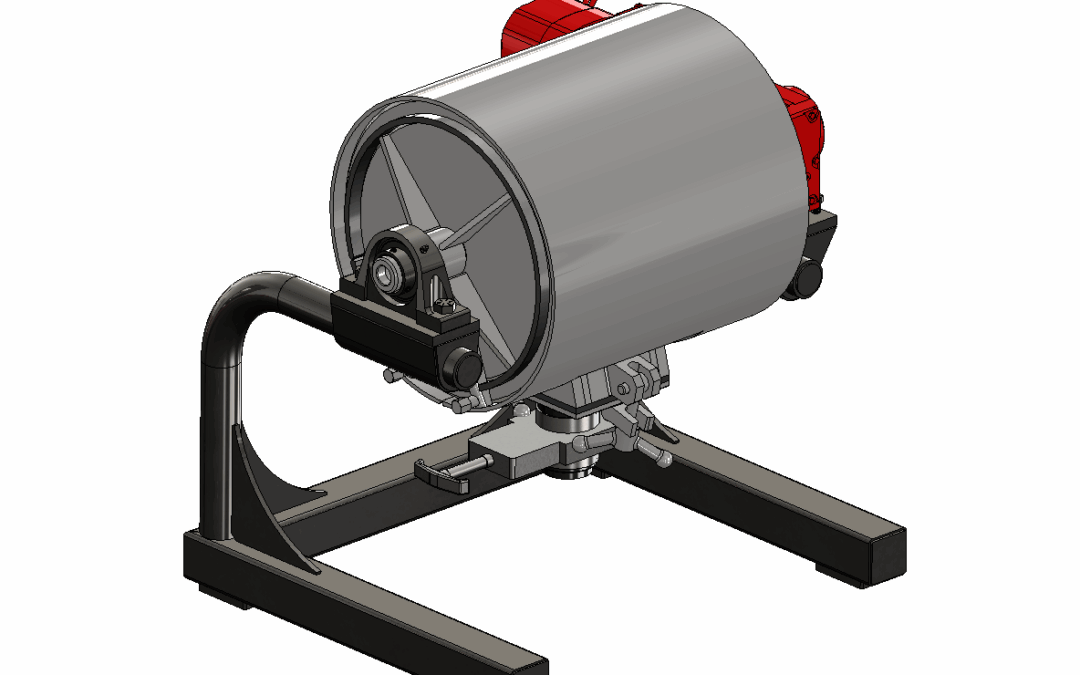
Achieving Maximum Efficiency in Your Milling Operations


Achieving efficiency in milling isn’t just about having the right equipment, it’s about using it effectively. Without proper calibration and maintenance, even the best milling systems can lead to inconsistent results, wasted materials, and operational downtime. The Adaptive Roller Mill (ARM) is designed to eliminate these inefficiencies, providing precision, adaptability, and long-term reliability. Whether you’re working in pharmaceuticals, specialty chemicals, advanced materials, or R&D, using the right techniques and best practices ensures you get the most out of your milling operations.


1. Selecting the Right Milling Parameters

Choosing the correct milling parameters is essential for achieving optimal particle size distribution and efficiency. Key factors to consider include:

    • Rotational Speed: Adjust speed settings based on material hardness and desired particle size. For example, softer materials require lower speeds to prevent over-processing, while denser or brittle materials benefit from higher speeds for better particle breakdown. Failing to optimize speed can lead to uneven particle distribution, inefficiencies, or excess heat generation.
    • Milling Duration: Shorter durations work for soft materials, while harder substances require extended processing.
    • Media Selection: Using the correct milling media (ceramic, stainless steel, or polymers) ensures material compatibility and prevents unwanted material interactions. For instance, ceramic media works well for heat-sensitive materials, while stainless steel is ideal for harder substances requiring greater impact force. Choosing the wrong media can result in contamination, excessive wear, or inefficiencies in particle refinement.

By fine-tuning these parameters, ARM users can achieve consistency and precision in every batch.

2. Ensuring Scalability Without Reconfigurations

One of ARM’s greatest strengths is its adaptability for small-scale testing to full production needs. Here’s how to maximize its scalable capabilities:

    • Start with a Single-Tier Configuration: Ideal for R&D or batch testing, allowing precise control over parameters.
    • Expand as Needed: Increase throughput by adding additional tiers without replacing the entire system.
    • Use Data to Fine-Tune Processes: Track milling results and adjust settings dynamically to maintain consistency at higher production volumes.


3. Reducing Downtime with Proactive Maintenance

Regular maintenance is key to ensuring ARM operates at peak efficiency for years to come. Best practices include:

    • Routine Inspections: Check for wear and tear on milling components and bearings. Ignoring routine inspections can lead to misalignment, roller inefficiencies, and potential damage, causing unexpected downtime and costly repairs. Catching minor issues early prevents major failures that can disrupt production.
    • Lubrication & Alignment: Ensure roller bearings and drive systems remain well-lubricated and aligned.
    • Scheduled Component Replacement: Proactively replace worn parts to prevent costly operational disruptions. Waiting until a component fully fails can lead to sudden breakdowns, lost production hours, and emergency repairs that cost significantly more than routine replacements. Having a maintenance schedule ensures continuous, uninterrupted milling performance.
4. Enhancing Process Efficiency with Digital Monitoring

To improve precision and efficiency, consider integrating digital monitoring tools into your workflow:

    • Data Logging for Process Control: Track speed, milling time, and temperature to maintain optimal conditions.
    • Automated Adjustments: Implement programmable settings for repeatability in production environments.
    • Quality Control Checks: use in-line particle size analysis to ensure uniform results.

Optimizing Milling for Long-Term Success

The Adaptive Roller Mill is designed to evolve alongside industry needs, offering a versatile and future-ready solution for material processing. By implementing these best practices, users can maximize efficiency, maintain product quality, and scale seamlessly.


Take the next step in optimizing your milling operations! Download the Adaptive Roller Mill Buyer’s Guide to explore key features, industry applications, and how ARM can enhance precision and efficiency in your process.

Most people never think about how the products they use every day are made.

Whether it’s the ceramic tile in your kitchen, the battery powering your phone, the paint on your walls, or the materials used in aerospace and medical applications, many products begin as raw powders. Before those powders become finished goods, they go through a series of processing steps that determine everything from product quality to production efficiency.

But while every step matters, there’s one thing manufacturers learn quickly: the process is only as reliable as the equipment behind it.


It All Starts with the Material

Raw materials rarely arrive in the perfect condition needed for production. They often need to be blended, dried, classified, or reduced to a specific particle size before they can move to the next stage.

That may sound straightforward, but small inconsistencies can create big problems.

A slight variation in particle size can affect how materials blend. Poorly processed material can impact product performance. And when production schedules are tight, even a brief interruption can create a ripple effect throughout the entire operation.

That’s why manufacturers place so much emphasis on consistency from the very beginning.


The Step That Often Determines Everything Else

Every stage of powder processing contributes to the quality of the finished product, but particle size reduction often has the greatest influence on everything that follows.

In industries like ceramics, even small variations in particle size can affect surface finish, strength, and overall product quality. Consistent milling helps manufacturers maintain tighter process control from batch to batch.

This is where ball mills play a critical role.

For decades, ball mills have been one of the most trusted methods for achieving uniform particle size and creating consistency throughout the manufacturing process. While the technology itself is proven, what really matters is how reliably the equipment performs over time.

Because in manufacturing, consistency isn’t achieved through occasional success. It’s achieved through repeatable performance every single day.


The Reality of Downtime

Ask any plant manager what keeps them up at night, and there’s a good chance downtime will be near the top of the list.

When a critical piece of equipment goes down, production doesn’t just slow down—it can stop altogether.

Production schedules slip. Customer delivery dates get pushed back. Operators sit idle while maintenance teams troubleshoot the issue. What starts as a maintenance problem can quickly become a much larger business challenge.

That’s why reliability isn’t simply a maintenance concern. It’s a production concern. It’s a profitability concern. And in many cases, it’s a customer satisfaction concern.

Manufacturers don’t just need equipment that works. They need equipment they can count on.


Built for the Long Haul

The best processing equipment isn’t necessarily the equipment with the most features. It’s the equipment that shows up every day and does its job.

Industrial environments are demanding. Equipment faces abrasive materials, long operating hours, and constant production pressure. Reliability isn’t something that’s added later—it’s something that must be engineered into the machine from the beginning.

That’s one reason ball mills continue to be trusted across so many industries. When designed and built correctly, they provide dependable performance for years while helping manufacturers maintain consistent product quality.

In many cases, the lowest-cost machine becomes the most expensive option when maintenance costs, replacement parts, and lost production time are taken into account. That’s why experienced manufacturers evaluate equipment based on total cost of ownership, not just the initial purchase price.


Why Reliability Matters More Than Ever

For decades, Orbis Machinery has worked with manufacturers across industries to solve particle size reduction challenges and improve process reliability.

In today’s manufacturing environment, reliable equipment becomes more than a production asset—it becomes a competitive advantage.

Reliable milling equipment helps create predictable outcomes, reduce waste, minimize downtime, and support long-term operational success. When manufacturers can trust their equipment, they can focus less on troubleshooting and more on growing their business.


Ready to Improve Your Milling Process?

Whether you’re replacing aging equipment, expanding production capacity, or looking to improve particle size consistency, the team at Orbis Machinery can help identify the right milling solution for your operation.

Our ball mills are built to deliver dependable performance, consistent results, and long-term value for manufacturers across a wide range of industries.

From advanced ceramics and battery materials to paints, minerals, and specialty chemicals, the products people depend on every day begin with a reliable manufacturing process. And that process depends on equipment manufacturers can trust.

Contact Orbis Machinery today to discuss your application and discover how a dependable ball mill can help improve consistency, reduce downtime, and keep production moving for years to come.

In manufacturing, every finished product starts with a process. And every successful process starts with equipment you can trust.

Because when production depends on performance, reliability isn’t optional—it’s everything.