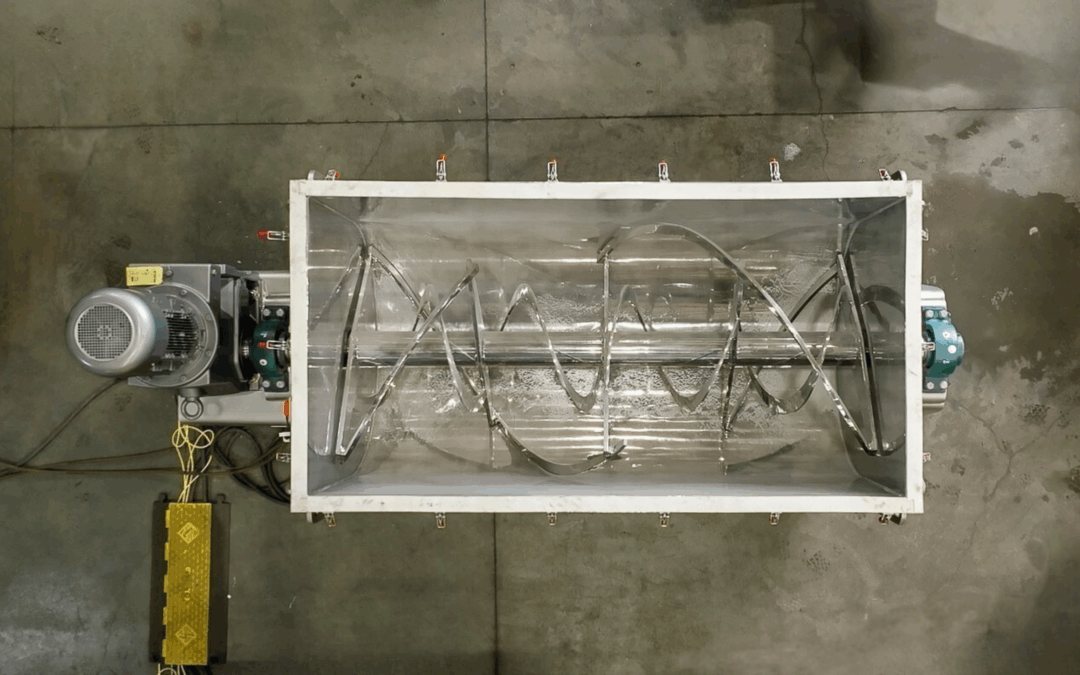
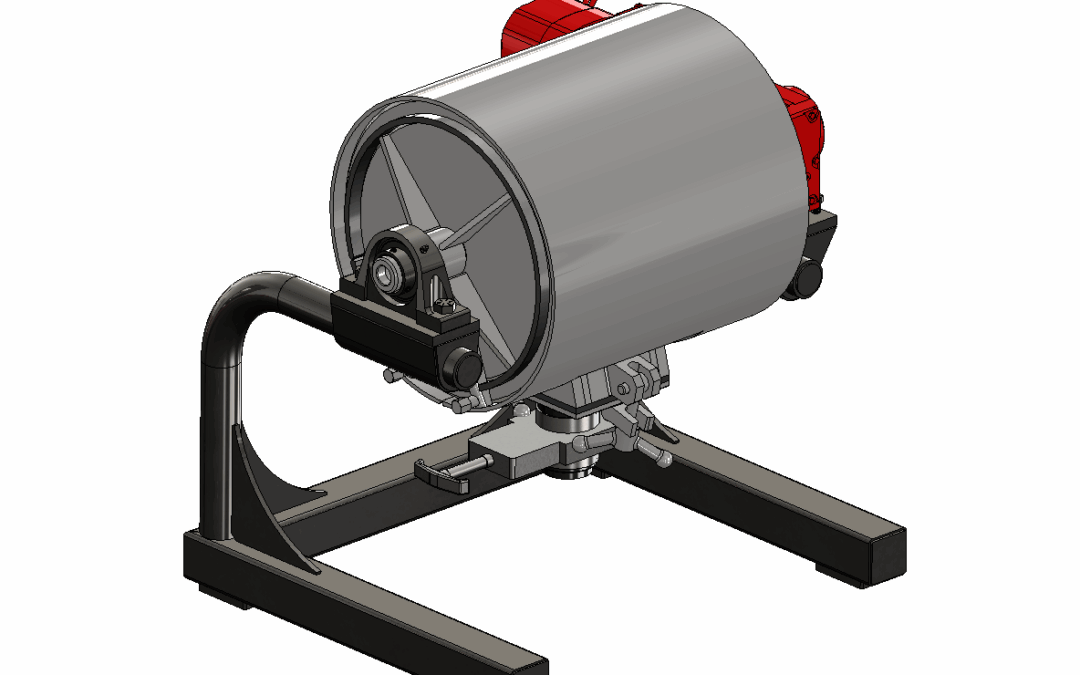
What are Double Arm Mixers and Mixer Extruders?
Before delving into the science, it’s essential to understand what Double Arm Mixers and Mixer Extruders are. These mixers are specialized pieces of equipment designed for the efficient mixing of high-viscosity materials. Orbis Machinery builds and specializes in three types of Double Arm Mixers:
- Batch Double Arm Mixer
- Batch Double Arm Extruder
- Continuous Double Arm Mixer Extruder
With two counter-rotating blades working in tandem within a U-shaped trough, they are specifically engineered to handle the toughest mixing challenges that involve pastes, dough-like substances, and dense compounds. Unlike traditional mixers, Double Arm Mixers and Mixer Extruders bring power, control, and precision into a single solution.
High-Viscosity Mixing Challenges
Mixing high-viscosity materials presents unique challenges. The material’s resistance to flow, commonly referred to as its viscosity, makes it difficult for standard equipment to achieve homogeneity. The physical properties of these materials—such as resistance to shear forces, dense texture, and correct blending—can lead to insufficient mixing, inconsistencies, or even product degradation if handled improperly. For industries where product quality directly impacts performance or safety, such as pharmaceuticals or aerospace, using the right equipment is critical. For instance, in the pharmaceutical industry, improper mixing can lead to uneven distribution of active ingredients, compromising the efficacy of the product. In advanced ceramics, poor mixing can result in structural weaknesses that affect the final product’s performance. These real-world examples highlight the importance of using specialized equipment to overcome high-viscosity mixing challenges.
The Science Behind Double Arm Mixers and Mixer Extruders
- Blade Design – The core of Orbis Double Arm Mixers and Mixer Extruders’ effectiveness lies in the dual-blade design. Each blade is specifically shaped to maximize the shearing and kneading actions, as well as mixing intensity. The blades—often referred to as sigma or masticator blades—rotate in a coordinated motion, which creates high shear zones that break down agglomerates and evenly distribute materials.
To better understand the efficiency of the blade design, consider the following key components:
- Shearing Action: The blades generate high shear zones, which are essential for breaking down agglomerates and ensuring a consistent mix.
- Kneading Action: The kneading motion helps with material uniformity, allowing even distribution throughout the batch.
- Blade Geometry: The shape and orientation of the blades contribute to efficient material flow and minimized dead spots.
This design ensures that even the thickest materials are uniformly blended without overworking or compromising the mixture. Including a diagram of the blade design can further illustrate how these elements work together to enhance mixing efficiency.
- Counter-Rotating Motion – The counter-rotating motion of the two blades plays a crucial role in moving materials from one end of the mixer to the other. This motion creates a circulation pattern that reduces dead spots and ensures all material is exposed to the same level of mixing energy. It’s this consistent flow of movement that makes Double Arm Mixers and Mixer Extruders ideal for achieving uniformity in materials with high viscosity.
- Efficient Heat Management – High-viscosity materials often generate frictional heat during mixing, which, if unmanaged, can lead to undesirable changes in the material properties. Orbis Double Arm Mixers and Mixer Extruders incorporate precise temperature control systems—through either a jacketed trough or built-in cooling elements—to manage temperature efficiently, maintaining material integrity throughout the mixing process. This ensures that the final product retains its quality and consistency.
Tailored Customization for Industry-Specific Needs
Orbis Double Arm Mixers and Mixer Extruders are not one-size-fits-all. We understand that each industry has unique requirements, which is why our mixers are customized for your specific applications. Whether it’s altering blade configurations, incorporating specialized coatings, or optimizing trough geometry, we ensure our equipment meets the exact needs of each client. This flexibility makes our Double Arm Mixers and Mixer Extruders an ideal solution for industries where quality, efficiency, and reliability are critical to success.
Proven Success in High-Performance Industries
Orbis Double Arm Mixers and Mixer Extruders have a proven track record across various high-performance industries. Companies in sectors such as composites, advanced ceramics, and specialty chemicals trust our mixers to deliver unmatched quality. One notable case involved our custom-made Continuous Double Arm Mixer Extruder, which helped boost production by 50% while maintaining the stringent quality standards required for composite decking production. This customer saw a reduction in production time by 30% and experienced a significant decrease in material waste, resulting in considerable cost savings. [Read the full case study here.] By understanding the specific demands of each application, we deliver solutions that maximize performance and operational success.
Why Choose Orbis Double Arm Mixers and Mixer Extruders?
Orbis Double Arm Mixers and Mixer Extruders are designed to solve your toughest mixing challenges. They ensure consistent results, even with hard-to-blend, high-viscosity materials. Advanced temperature controls maintain product integrity, while high-torque capabilities handle extreme viscosities with ease. Customization options allow the equipment to adapt to your unique production needs. These mixers reduce downtime, improve batch uniformity, and enhance overall efficiency. Built for durability and precision, Orbis mixers help streamline operations, minimize waste, and deliver reliable performance for demanding applications.
Ready to Take Your Process to the Next Level?
Stop dealing with inconsistent quality and inefficiencies. If your production relies on high-viscosity materials and demands the highest standards of quality, it’s time to consider Orbis Double Arm Mixers and Mixer Extruders. Reach out today for a tailored solution and learn how our expertise can transform your mixing process and deliver consistent, high-quality results with out equipment.