Scaling Innovation with the Right Milling Solution
How do you scale precision milling in an R&D environment without investing in multiple machines? Many research labs, universities, and specialty manufacturers face this exact challenge, until now.
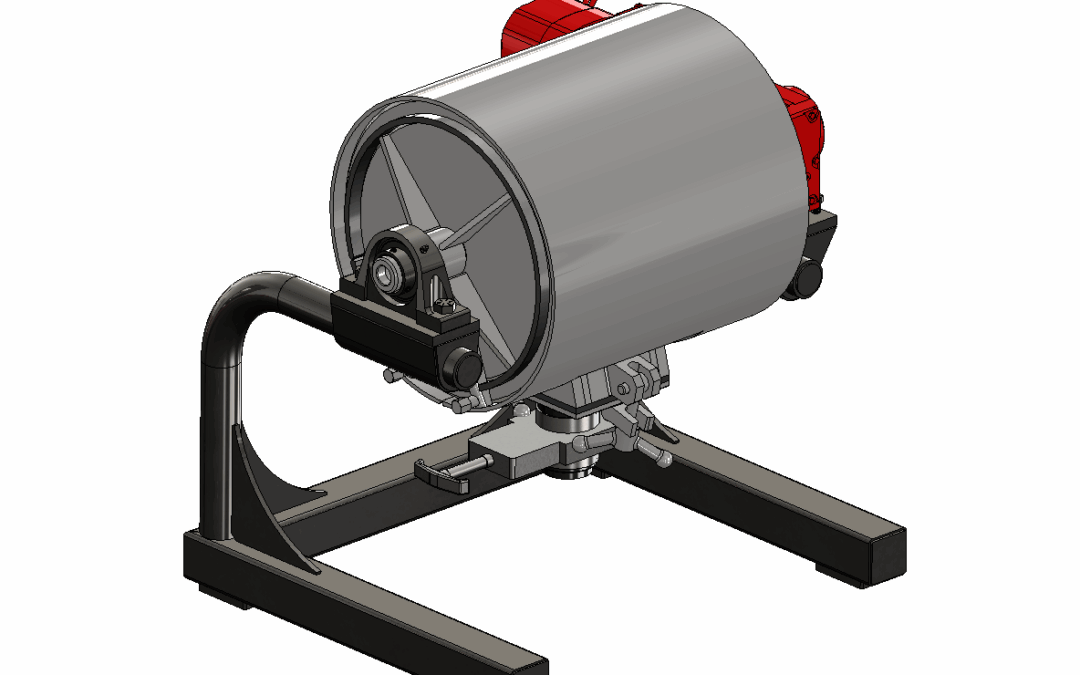
The Adaptive Roller Mill (ARM) is a milling solution engineered for laboratories, research facilities, and small-scale production environments. Designed to adapt to evolving industry needs, ARM delivers precision and efficency while allowing users to seamlessly refine their milling processes across different applications.
Meeting the Demands of Modern Material Processing
Adaptive Design to Meet Your Needs
One of the biggest challenges in material processing is finding a milling solution that grows with your operations. ARM features an adaptive tier system, allowing users to start with a single-tier setup and expand to additional tiers as their needs evolve. This means you can increase capacity without purchasing an entirely new machine, making it a cost-effective choice for labs and production facilities looking for long-term scalability.
ARM’s precision-enginnered rollers ensure uniform and repeatable milling, maintaining tight particle size distribution across different materials. With adjustable speed and media controls, researchers and manufacturers can fine-tune milling parameters to match their exact requirements, optimizing efficiency and output.
Material processing is no longer a one-size-fits-all operation. Researchers require precise control over milling variables to achieve consistent results without the burden of expensive reconfigurations. The Adaptive Roller Mill bridges this gap by offering:
Fine Particle Control – Adjustable speed and media settings ensure consistent, repeatable results.
Adaptive Performance – Adjusts effortlessly to different materials and processing needs without requiring additional machines.
Versatile Application – Designed for pharmaceuticals, R&D, specialty chemicals, and advanced materials.
Compact, Lab-Friendly Design – Provides industrial-grade milling performance in a space-efficient footprint.
Unlike traditional milling systems that require multiple machines for different applications, ARM adjusts seamlessly to different materials and batch sizes, elimating the need for redundant equipment.
Designed for Researchers, Scientists, and Engineers
R&D Labs & Universities: Research facilities often work with small batches and experimental materials, requiring a milling solution that can adapt to different testing needs without requiring new equipment. With ARM’s adaptive controls, teams can refine their processes and scale efficiently as projects move from lab testing to pilot production.
Pharmaceuticals & Speciality Chemicals: Precision is paramount in pharmaceutical and chemical applications, where even slight variations in particle size can impact efficacy. ARM’s precision milling technology ensures reliable results while preserving material integrity across multiple formulations.
Advanced Materials & Manufacturing: High-tech industries working with ceramics, semiconductors, or metal powders need tight control over particle distribution. ARM delivers industrial-grade performance in a compact, lab-friendly system, helping manufactureres meet demanding quality standards with confidence.
Real-World Applications: How ARM Can Address Industry Challenges
Example 1: Addressing Particle Size Consistency in Pharmaceutical R&D
Pharmaceutical companies developing new drug formulations often face inconsistencies in particle size due to limitations in traditional milling equipment. Many existing mills generate excess heat, which can affect the stability of active ingredients. A milling solution like the Adaptive Roller Mill, with precise speed and media control, could help maintain uniform particle size distribution while preserving material integrity, ensuring higher-quality formulations and a more streamlined development process.
Example 2: Supporting Scalability in University Research Labs
University research labs frequently require milling solutions that can accommodate different materials without needing multiple machines. Finding equipment that can handle both small-scale experimental batches and larger test runs is a common challenge. With adaptive controls, a system like ARM could allow researchers to refine processes efficiently, conduct material trials, and scale as projects evolve, eliminating the cost and complexity of switching equipment.
Example 3: Enhancing Precision for Specialty Chemical Manufacturing
Manufacturers working with advanced coatings, catalysts, or specialty chemicals need ultra-fine, uniform particles to maintain product performance. Conventional milling systems often require extensive recalibrations when switching between formulations, leading to inefficiencies and material waste. A milling system designed with adjustable precision settings, like ARM, can help manufacturers fine-tune processing conditions quickly, reducing downtime and improving overall efficiency.
Cost-Effective, Scalable Milling for Long-Term Savings
Traditional milling systems often require purchasing multiple machines to handle different batch sizes and materials, leading to high upfront costs and ongoing maintenance expenses. ARM’s expandable tier system and adaptable performance eliminate this need, allowing users to increase capacity over time without requiring significant reinvestment. This streamlined approach reduces capital expenditures and operational costs, making ARM an efficient solution for research facilities and manufacturers alike.
Future-Proof Your Milling Operations
The Adaptive Roller Mill isn’t just another milling machine, it’s a flexible, high-performance solution designed to evolve with your needs. Whether you’re testing new formulations, refining materials for advanced applications, or scaling production, ARM ensures long-term efficiency and precision without unnecessary investment in additional equipment.
Ready to see how ARM can transform your operations?
Learn more HERE.