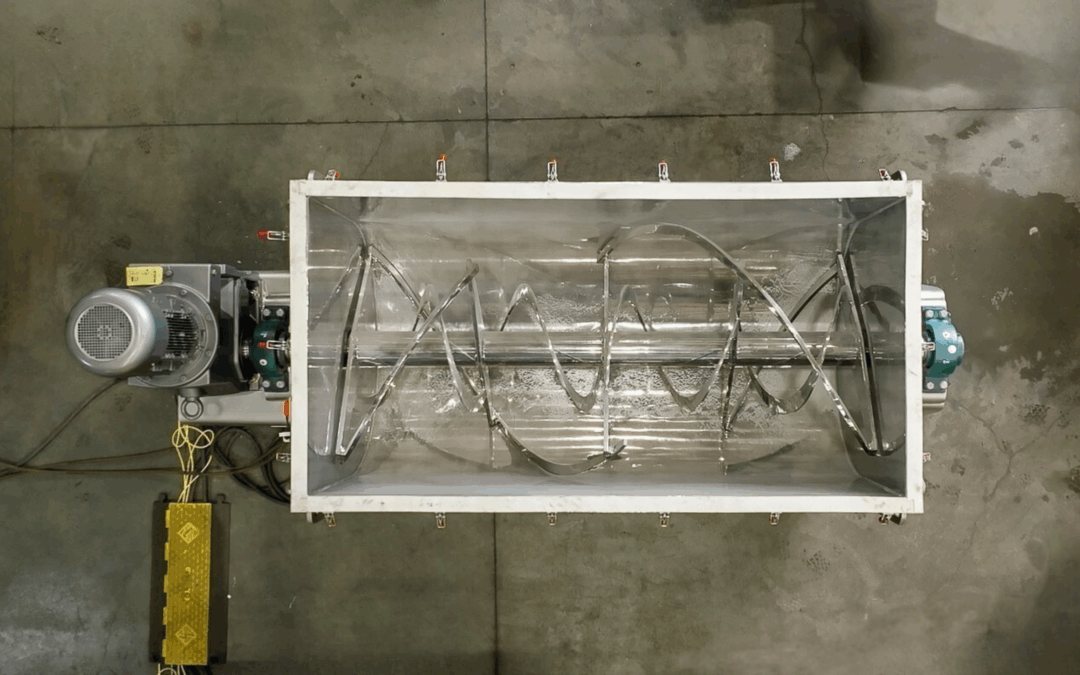
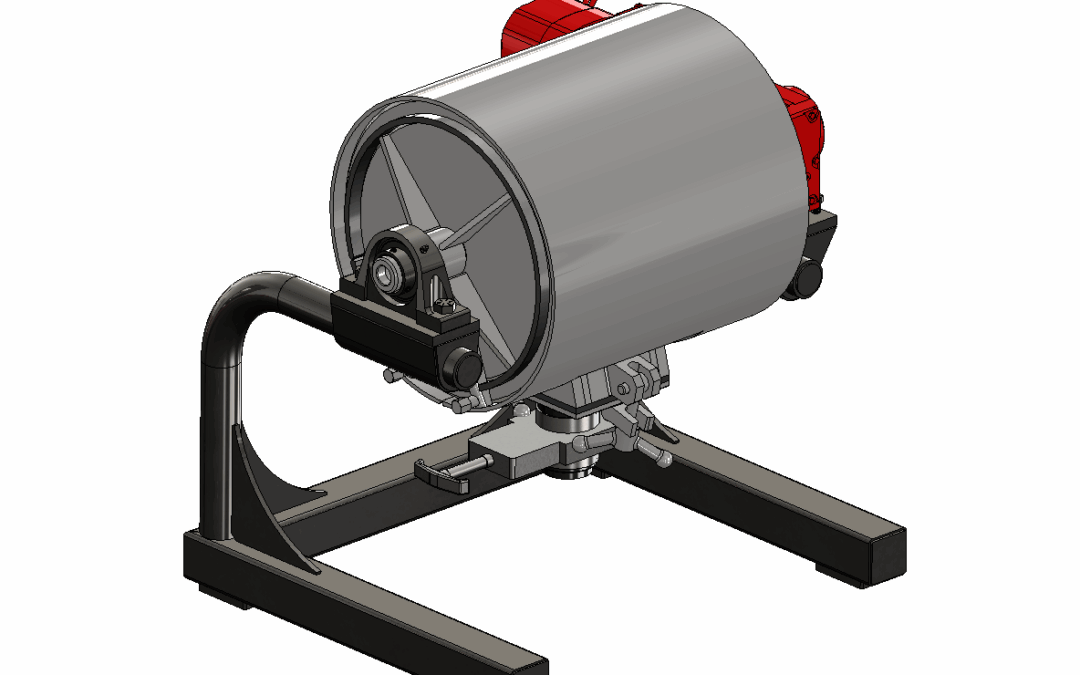
Unveiling the Future of Material Processing

Orbis Machinery is proud to introduce the Adaptive Roller Mill (ARM), a state-of-the-art machine engineered to set new standards in material processing. Designed for a wide range of applications—from ceramics and metals to pharmaceuticals and beauty products—this innovative mill combines precision, efficiency, and scalability to meet the demanding needs of industry professionals.

Key Features of the Adaptive Roller Mill:

  • Precision and Control: Achieve fine particle sizes and a narrow distribution range with our advanced controls over speed, media size, and milling duration.
  • Efficient and Economical: Our design minimizes frictional heat and media-to-media friction, reducing contamination and operational costs while preserving the integrity of heat-sensitive materials.
  • Scalability: From small laboratory setups to large-scale production lines, the ARM grows with your needs, thanks to its modular design that supports up to four tiers.
  • Durability and Adaptability: Built with industrial-grade materials and designed for longevity, the ARM’s modular structure allows for easy upgrades and maintenance.


Designed for Industry Leaders

The ARM is tailored for precision-driven sectors such as pharmaceuticals, cosmetics, and advanced materials, where professionals like engineers, production managers, and R&D specialists prioritize reliability and efficiency. This mill addresses their core pain points: maintaining product consistency, minimizing contamination, and achieving scalable production capabilities.

A Leap Over Competitors

Compared to similar mills from competitors like U.S. Stoneware and Paul O Abbe, the ARM offers unmatched advantages:

  • Expandability: Unlike fixed-design mills that require additional purchases for increased capacity, the ARM expands through modular “add-on” components.
  • Cost Efficiency: Offering superior performance at a more economical price point, the ARM provides significant savings while enhancing operational capabilities.
  • Larger Roll Sizes: Accommodating rolls up to 72 inches, the ARM surpasses the typical 60-inch limit, offering greater versatility and capacity.

Embodying Orbis Machinery’s Core Values

The introduction of the ARM is a testament to Orbis Machinery’s commitment to innovation and customer support. It aligns perfectly with our strategic goals:

  • Market Responsiveness: By offering solutions from experimental to full-scale production, we demonstrate our understanding of diverse industry needs.
  • Customer Journey Enhancement: The ARM’s scalability supports customers from initial testing phases to full production, enhancing satisfaction and loyalty.
  • Brand Expansion: This versatile and adaptable solution opens new markets and attracts clients across various industries, increasing our brand’s influence.

Emotional Connections: Safety, Empowerment, and Progress

We aim to evoke a sense of:

  • Security and Safety: With its reliable design, the ARM reduces operational risks, ensuring safety in your processes.
  • Empowerment: The flexibility and adjustability of the ARM allow you to experiment and optimize your operations, empowering informed decision-making.
  • Peace of Mind and Innovation: Our customers enjoy peace of mind with the ARM’s cost-effectiveness and technological excellence, positioning them at the forefront of industry trends.

Beyond the Cutting Edge: Your Next Steps with Orbis Machinery

The launch of the Adaptive Roller Mill is more than just an introduction of a new product—it’s an invitation to our clients to evolve and grow with the latest in material processing technology. We are excited to see how the ARM will revolutionize production lines across various industries, enhancing efficiency and quality where it matters most.

Ready to Experience the Difference?

Discover how the Orbis Machinery Adaptive Roller Mill can transform your material processing operations. Visit our website to learn more about the ARM, download detailed specifications, or schedule a live demo with our experts. Embrace the future of precision milling with a partner that understands your need for perfection.

Stay Connected

As Orbis Machinery continues to innovate and expand our product offerings, we invite you to stay connected. Follow us on LinkedIn, subscribe to our newsletter, or check our blog regularly for updates, insights, and more stories of how our solutions are making a difference in industries around the globe.

Together, let’s drive the future of material processing—efficiently, sustainably, and precisely.

Most people never think about how the products they use every day are made.

Whether it’s the ceramic tile in your kitchen, the battery powering your phone, the paint on your walls, or the materials used in aerospace and medical applications, many products begin as raw powders. Before those powders become finished goods, they go through a series of processing steps that determine everything from product quality to production efficiency.

But while every step matters, there’s one thing manufacturers learn quickly: the process is only as reliable as the equipment behind it.


It All Starts with the Material

Raw materials rarely arrive in the perfect condition needed for production. They often need to be blended, dried, classified, or reduced to a specific particle size before they can move to the next stage.

That may sound straightforward, but small inconsistencies can create big problems.

A slight variation in particle size can affect how materials blend. Poorly processed material can impact product performance. And when production schedules are tight, even a brief interruption can create a ripple effect throughout the entire operation.

That’s why manufacturers place so much emphasis on consistency from the very beginning.


The Step That Often Determines Everything Else

Every stage of powder processing contributes to the quality of the finished product, but particle size reduction often has the greatest influence on everything that follows.

In industries like ceramics, even small variations in particle size can affect surface finish, strength, and overall product quality. Consistent milling helps manufacturers maintain tighter process control from batch to batch.

This is where ball mills play a critical role.

For decades, ball mills have been one of the most trusted methods for achieving uniform particle size and creating consistency throughout the manufacturing process. While the technology itself is proven, what really matters is how reliably the equipment performs over time.

Because in manufacturing, consistency isn’t achieved through occasional success. It’s achieved through repeatable performance every single day.


The Reality of Downtime

Ask any plant manager what keeps them up at night, and there’s a good chance downtime will be near the top of the list.

When a critical piece of equipment goes down, production doesn’t just slow down—it can stop altogether.

Production schedules slip. Customer delivery dates get pushed back. Operators sit idle while maintenance teams troubleshoot the issue. What starts as a maintenance problem can quickly become a much larger business challenge.

That’s why reliability isn’t simply a maintenance concern. It’s a production concern. It’s a profitability concern. And in many cases, it’s a customer satisfaction concern.

Manufacturers don’t just need equipment that works. They need equipment they can count on.


Built for the Long Haul

The best processing equipment isn’t necessarily the equipment with the most features. It’s the equipment that shows up every day and does its job.

Industrial environments are demanding. Equipment faces abrasive materials, long operating hours, and constant production pressure. Reliability isn’t something that’s added later—it’s something that must be engineered into the machine from the beginning.

That’s one reason ball mills continue to be trusted across so many industries. When designed and built correctly, they provide dependable performance for years while helping manufacturers maintain consistent product quality.

In many cases, the lowest-cost machine becomes the most expensive option when maintenance costs, replacement parts, and lost production time are taken into account. That’s why experienced manufacturers evaluate equipment based on total cost of ownership, not just the initial purchase price.


Why Reliability Matters More Than Ever

For decades, Orbis Machinery has worked with manufacturers across industries to solve particle size reduction challenges and improve process reliability.

In today’s manufacturing environment, reliable equipment becomes more than a production asset—it becomes a competitive advantage.

Reliable milling equipment helps create predictable outcomes, reduce waste, minimize downtime, and support long-term operational success. When manufacturers can trust their equipment, they can focus less on troubleshooting and more on growing their business.


Ready to Improve Your Milling Process?

Whether you’re replacing aging equipment, expanding production capacity, or looking to improve particle size consistency, the team at Orbis Machinery can help identify the right milling solution for your operation.

Our ball mills are built to deliver dependable performance, consistent results, and long-term value for manufacturers across a wide range of industries.

From advanced ceramics and battery materials to paints, minerals, and specialty chemicals, the products people depend on every day begin with a reliable manufacturing process. And that process depends on equipment manufacturers can trust.

Contact Orbis Machinery today to discuss your application and discover how a dependable ball mill can help improve consistency, reduce downtime, and keep production moving for years to come.

In manufacturing, every finished product starts with a process. And every successful process starts with equipment you can trust.

Because when production depends on performance, reliability isn’t optional—it’s everything.