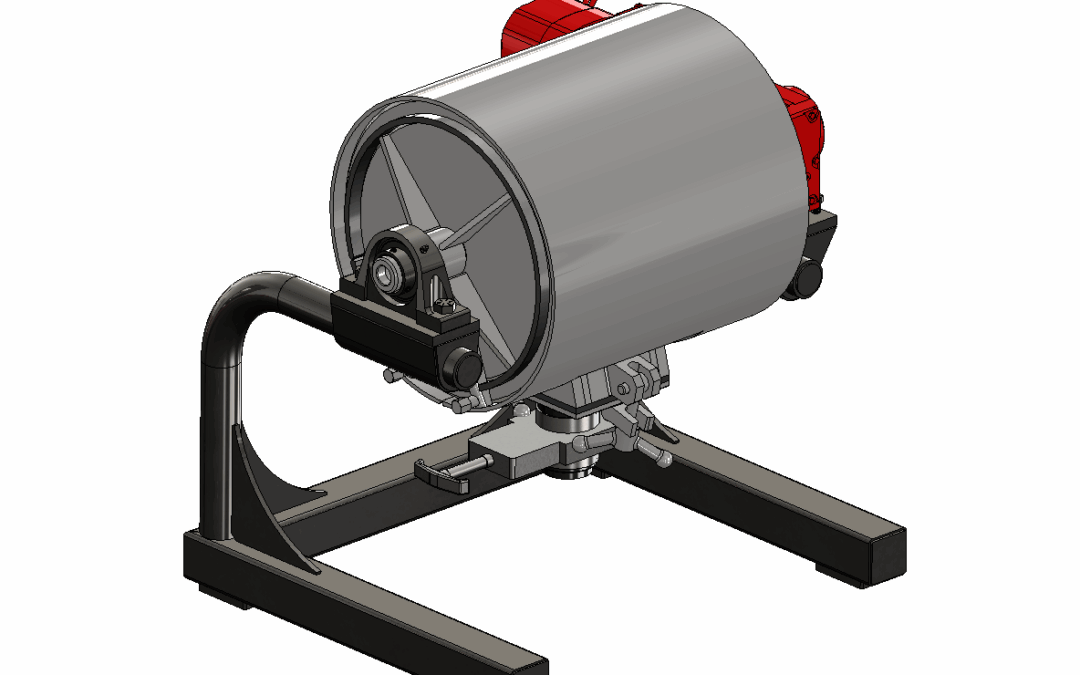
In the advanced ceramics industry, product performance hinges on the uniformity and consistency of raw materials during production. Whether crafting aerospace components, biomedical implants, or electronic insulators, the structural integrity and functional properties of ceramic products are shaped by the precision of material mixing. A critical solution for achieving this level of precision is the Batch Double Arm Mixer, a specialized blending system designed to ensure ceramic powders and binders are evenly distributed, leading to stronger, defect-free ceramic products.

Why Precision Mixing Matters in Ceramics

Advanced ceramics are engineered for demanding applications requiring exceptional strength, durability, and performance. Achieving these properties begins in the raw material preparation phase, where precision mixing plays a pivotal role.


Key Reasons Precision Mixing is Crucial for Ceramics:
  • Material Uniformity: Inconsistent particle distribution creates weak points, leading to premature structural failures.
  • Defect Prevention: Poor blending results in voids, agglomerates, and density variations, which compromise quality.
  • Enhanced Mechanical Strength: Homogenous mixtures produce ceramic components with superior strength and reliability.
  • Consistent Firing and Sintering: Uniform material distribution ensures even heat absorption, reducing risks of warping or cracking during sintering.

The Role of the Batch Double Arm Mixer in Precision Blending

The Batch Double Arm Mixer is purpose-built for high-viscosity and powder-based materials, making it indispensable for ceramic manufacturing. Its design enables unmatched precision in material blending, addressing the industry’s most critical challenges.  


  1. Dual Counter-Rotating Arms
  • The mixer features two arms rotating in opposite directions, continuously folding and shearing ceramic powders and binders.
  • This motion prevents material clumping and ensures every particle is evenly coated, creating a defect-free mixture.
  1. Formation of Homogeneous Mixtures
  • The double-arm action promotes even particle distribution across the batch, reducing variability and improving consistency.
  • This ensures that mechanical properties remain uniform, critical for high-performance ceramic applications.
  1. Precise Batch Control
  • Batch processing allows manufacturers to meticulously control material ratios and monitor mixing parameters.
  • This level of precision enables repeatability, a key requirement for industries with strict quality standards.
  1. Minimized Air Entrapment
  • The mixing action is designed to minimize trapped air, reducing the formation of internal voids that could weaken components during sintering.

Key Benefits for Advanced Ceramics Manufacturers

Integrating Batch Double Arm Mixers into production processes provides significant advantages, including:

Stronger Ceramic Components: Precise mixing enhances mechanical strength and durability by ensuring uniform material distribution.

Consistent Product Quality: Repeatable batch results reduce variability and increase customer confidence.

Reduced Material Waste: Efficient blending minimizes ingredient loss and defective batches, leading to cost savings.

Improved Sintering Performance: Homogenous mixtures deliver more predictable and uniform sintering outcomes.

Scalability: Batch mixers can handle both small-scale R&D projects and full-scale industrial production, adapting to manufacturers’ needs.

Industry Trends Driving the Demand for Precision Mixing

Emerging trends in the ceramics industry emphasize the growing importance of precision mixing technology:

  • Increased Use of Technical Ceramics Industries like electronics, energy, and defense rely on advanced ceramics for their exceptional heat resistance, mechanical strength, and versatility.
  • Sustainability Initiatives Precision mixing reduces material waste and energy consumption, aligning with the industry’s push toward eco-friendly production practices.
  • Automation and Quality Control Modern batch mixers incorporate smart controls and real-time monitoring systems, enabling manufacturers to maintain tight process tolerances and ensure consistent results.

Precision Mixing: The Foundation of High-Quality Ceramics

In the realm of advanced ceramics, precision mixing is not just a technical step—it’s the foundation upon which quality and performance are built. A Batch Double Arm Mixer delivers the uniformity and consistency required to produce defect-free, high-strength ceramic components.

For manufacturers aiming to elevate product quality, minimize defects, and maintain a competitive edge, investing in advanced mixing technology is more than a necessity—it’s a strategic advantage.

At Orbis Machinery, we specialize in providing state-of-the-art mixing solutions tailored to the unique demands of advanced ceramics manufacturing. Contact us today to explore how our Batch Double Arm Mixer can revolutionize your production process.

Most people never think about how the products they use every day are made.

Whether it’s the ceramic tile in your kitchen, the battery powering your phone, the paint on your walls, or the materials used in aerospace and medical applications, many products begin as raw powders. Before those powders become finished goods, they go through a series of processing steps that determine everything from product quality to production efficiency.

But while every step matters, there’s one thing manufacturers learn quickly: the process is only as reliable as the equipment behind it.


It All Starts with the Material

Raw materials rarely arrive in the perfect condition needed for production. They often need to be blended, dried, classified, or reduced to a specific particle size before they can move to the next stage.

That may sound straightforward, but small inconsistencies can create big problems.

A slight variation in particle size can affect how materials blend. Poorly processed material can impact product performance. And when production schedules are tight, even a brief interruption can create a ripple effect throughout the entire operation.

That’s why manufacturers place so much emphasis on consistency from the very beginning.


The Step That Often Determines Everything Else

Every stage of powder processing contributes to the quality of the finished product, but particle size reduction often has the greatest influence on everything that follows.

In industries like ceramics, even small variations in particle size can affect surface finish, strength, and overall product quality. Consistent milling helps manufacturers maintain tighter process control from batch to batch.

This is where ball mills play a critical role.

For decades, ball mills have been one of the most trusted methods for achieving uniform particle size and creating consistency throughout the manufacturing process. While the technology itself is proven, what really matters is how reliably the equipment performs over time.

Because in manufacturing, consistency isn’t achieved through occasional success. It’s achieved through repeatable performance every single day.


The Reality of Downtime

Ask any plant manager what keeps them up at night, and there’s a good chance downtime will be near the top of the list.

When a critical piece of equipment goes down, production doesn’t just slow down—it can stop altogether.

Production schedules slip. Customer delivery dates get pushed back. Operators sit idle while maintenance teams troubleshoot the issue. What starts as a maintenance problem can quickly become a much larger business challenge.

That’s why reliability isn’t simply a maintenance concern. It’s a production concern. It’s a profitability concern. And in many cases, it’s a customer satisfaction concern.

Manufacturers don’t just need equipment that works. They need equipment they can count on.


Built for the Long Haul

The best processing equipment isn’t necessarily the equipment with the most features. It’s the equipment that shows up every day and does its job.

Industrial environments are demanding. Equipment faces abrasive materials, long operating hours, and constant production pressure. Reliability isn’t something that’s added later—it’s something that must be engineered into the machine from the beginning.

That’s one reason ball mills continue to be trusted across so many industries. When designed and built correctly, they provide dependable performance for years while helping manufacturers maintain consistent product quality.

In many cases, the lowest-cost machine becomes the most expensive option when maintenance costs, replacement parts, and lost production time are taken into account. That’s why experienced manufacturers evaluate equipment based on total cost of ownership, not just the initial purchase price.


Why Reliability Matters More Than Ever

For decades, Orbis Machinery has worked with manufacturers across industries to solve particle size reduction challenges and improve process reliability.

In today’s manufacturing environment, reliable equipment becomes more than a production asset—it becomes a competitive advantage.

Reliable milling equipment helps create predictable outcomes, reduce waste, minimize downtime, and support long-term operational success. When manufacturers can trust their equipment, they can focus less on troubleshooting and more on growing their business.


Ready to Improve Your Milling Process?

Whether you’re replacing aging equipment, expanding production capacity, or looking to improve particle size consistency, the team at Orbis Machinery can help identify the right milling solution for your operation.

Our ball mills are built to deliver dependable performance, consistent results, and long-term value for manufacturers across a wide range of industries.

From advanced ceramics and battery materials to paints, minerals, and specialty chemicals, the products people depend on every day begin with a reliable manufacturing process. And that process depends on equipment manufacturers can trust.

Contact Orbis Machinery today to discuss your application and discover how a dependable ball mill can help improve consistency, reduce downtime, and keep production moving for years to come.

In manufacturing, every finished product starts with a process. And every successful process starts with equipment you can trust.

Because when production depends on performance, reliability isn’t optional—it’s everything.